10 Top Books On Guttering Repairs Near Me
Guttering Repairs Near Me Your gutter system shields your foundation, siding, landscaping, and roof from water damage. However, over time debris and weather conditions can cause clogs and leaks. 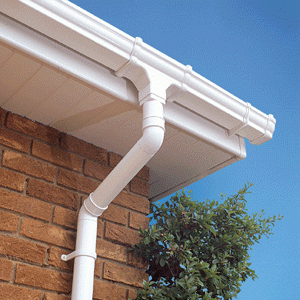 Regular maintenance and cleaning will help, but more severe issues require the help of a professional. They provide a top-quality complete customer experience and can quickly restore your gutters. Gutters damaged Gutters A home's gutters are vital for preventing water damage the interior of the house and also for preserving its exterior. Over time, however, gutters can develop a number of problems that can compromise their functionality and even the structural integrity of your house's structure. The most frequent issues are leaks, sagging and clogs. It is essential to fix any of these issues as soon as you can to avoid them from becoming worse over time. Consult a professional if not sure how to fix the issue. They will inspect your gutters and offer you an estimate for repair or replacement. If necessary, they can assist you in filing an insurance claim through your company. uPVC Guttering Specialists of these issues are fixable. The first step is removing the debris that has accumulated in your gutters. After you have removed the debris you can replace any sections that have become blocked. You can also make use of power washers to wash your gutters thoroughly and remove any buildup. This will ensure that your gutters are functioning properly and prevent future clogs. Sagging gutters are a different issue. This is caused by a number of causes, such as inadequate installation, or heavy snow or debris weight. If your gutters are falling and sagging, you must have them fixed as quickly as possible to avoid major damage to your home. Checking your gutters is also crucial following an event. Strong winds can push gutter sections away from the home, or cause them to separate from downspouts. Check for visible damage such as holes or dent. To fix a hole in your gutter, you'll need cut a piece of wire screening sufficient to completely cover the damaged section of your gutter. Once the patch is place, apply a thin layer of roof cement over the screen and press it down to ensure it's completely covered. Lastly, it's essential to find any loose or broken spikes as well as fascia hanger brackets. These can be fixed by getting rid of the old spikes and replacing them with new ones. You'll need to use an extension ladder and a few tools to do this. If the spikes are rusted and are difficult to remove, try using a hammer or a pry-bar. After the old spikes have been removed, you can replace them with new ones that will be more simple to install and will be less likely to slide out of the gutter. Sagging Gutters Sagging gutters pose a serious issue that could cause water damage to your home. If you notice your gutters sagging, take action immediately to avoid costly issues. A accumulation of debris is one of the main causes of sinking gutters. Debris can range from leaves to twigs which can cause gutters to become overly heavy. The best method to prevent the accumulation of debris is to set up a an ongoing cleaning schedule. Another reason for sinking gutters is the degeneration of fasteners. Metal gutter hangers used to connect the gutters to fascia boards may be corroded over time. You can identify decaying gutter hangers by examining them from a ladder. Look for crooked, bent-out-of-shape, or rusted hangers and replace them if needed. Gutters that aren't flowing properly can be caused by a wrong gutter slope. Your gutters should be slightly sloped to ensure that water drains away from your house and towards the downspouts. You can correct an incorrect slope by adjusting the gutter hangers or using a level. In the end, it's possible that your gutters are sagging due to structural issues with your roof or house. In this case, it is best to get a professional to check and repair your gutters. Before you start repairing your sagging gutters ensure that you have all the tools needed. You'll save money as well as time by not having to make unnecessary trips to the hardware shop. You should also use a sturdy ladder that is safe to climb. Wear gloves and safety glasses to safeguard yourself when you work on your gutters. Leaking Gutters Gutter systems absorb and disperse water away from your home to avoid water damage. However, when gutters fail, this could result in a myriad of problems that require costly repair or replacement. Leaking gutters can be detected by peeling paint off of windows and doors as well as puddles that appear on the lawn or in the landscaping, and also the growth of mold and mildew. Gutter leaks are caused by numerous factors, like obstructions or debris, wear and tears loose fasteners or an incorrect pitch. A professional inspection can help identify the root of the issue and suggest the most effective repair method. Leaking gutters are also due to damaged or corroded gutters, downspouts or troughs. A professional will remove the gutters and downspouts to clean the areas that are clogged. Then, they will employ a caulking device to apply a waterproof sealant to the joints. After the caulk has dried it is time to reattach the gutters. downspouts can be reattached, and any gaps or holes are filled with caulk. It is normal for gutters to warp or sag due to temperature fluctuations and the expansion and contracting of metal. When this happens rainwater can pool or stand still in the gutters rather than being redirected away from the house which could lead to foundation issues, rotted wood and basement flooding. Gutters and downspouts should be installed at an incline of a slight degree to ensure the proper flow of rainwater. If the incline becomes uneven it could disrupt the flow of rainwater, causing it to overflow and cause damage to the gutter system as well as siding, windows, and roofing. The most effective way to avoid clogged gutters is to carry out routine maintenance and cleaning twice a year during spring, once in the summer and again in the autumn. This will prevent leaves, twigs, and other debris from clogging the downspouts and gutters, which can cause them to overflow or leak. It is important to inspect your gutter downspouts frequently for signs of rust, or other signs of damage, and replace them if necessary. Damaged Downspouts Downspouts help direct water away from your home, but clogged or damaged downspouts can prevent them from working properly. Downspouts may become blocked by leaves, twigs and other debris, which could cause water to flow into the gutters or into your house. Incorrectly aligned downspouts can cause water to collect and damage your foundation. It is best to inspect the downspout by removing it from the ground. This can be done using ladders, but it's essential to use a sturdy one and follow all safety guidelines. If you can climb close enough to the downspout and see any visible obstructions, you can clear them using a garden hose. If the clog is severe it may be necessary to disconnect the downspout and the gutter to clear it fully. Check the downspout and see whether there are leaks or cracks. It is common for this to occur near the joints of the downspout where the sections connect. Leaking downspouts can be fixed by resealing the seams. If you notice a significant crack, however you'll have to think about replacing the entire downspout. Another issue with downspouts is that they're too small to handle the amount of water they're supposed to hold. This could cause the water spill across the gutter's sides and land next to the foundation, which can cause costly structural damage. Downspout extensions can be easily installed to solve this issue. The gutter downspout might not be properly positioned. Downspouts are usually placed too close to the home. This can result in damage to the foundation. Fortunately, kits for extending downspouts can solve this issue by extending the downspouts until they're further away from your house. If you're looking to do this, make sure to speak with an experienced gutter contractor to get help.